Showing posts with label Sectarianism. Show all posts

Saturday, June 17, 2017

Erdoğan wants Turkish military bases in Qatar and Saudi Arabia, condemns “Iranian expansionism” in the Middle East

    Saturday, June 17, 2017   No comments
Turkey does not condone “Iranian expansionism” in the Middle East although it does recognize its role and its cooperation in resolving problems in Iraq and Syria, President Recep Tayyip Erdoğan has said.

“Is Syria a theater for Iran’s sectarian expansionism? Yes, it is. Is Iraq a theater also? Yes, it is. I regard this a Persian expansionism rather than a sectarian one. I should specifically say that I do not approve of this Persian expansionism,” Erdoğan said in an interview with Portugal’s RTP channel, according to Anadolu Agency on June 16.

Turkey has long criticized Iran for pursuing a sectarian-based policy in the Middle East although it continues to work with Tehran on a number of regional issues.

Wednesday, March 29, 2017

Turkey criticizes move to raise Kurdish flag in Iraq

    Wednesday, March 29, 2017   No comments
ISR Comment:


Turkish government seem to have checkmated itself in Iraq and Syria: At one point it offered sanctuary to a Iraqi Sunni politician accused of connections to terrorism undermining Iraq’s government efforts to establish control over all of its territory. That move was intended to find a path to influence decision making in Iraq. To further pressure the central Iraqi government, which is dominated by Shia who represent the majority of the population in that country, the Turkish government chose to deal the regional Kurdish government and even sign energy deals, in violation of Iraqi law that has the authority over oil trade. Now, that Kurdish people in Syria are carving territory to establish an autonomous region that could potentially link with the Iraqi Kurdish autonomous region, encouraging Kurds in Turkey to do the same, the Turkish government is condemning a Kurdish move in Iraq. How can Turkey limit Kurdish gains after it did its best to weaken the central governments in Syria and Iraq?


________________
Foreign Minister Mevlut Cavusoglu has criticized the decision of an Iraqi provincial assembly to raise a Kurdish flag alongside the Iraqi national flag at public buildings.

On Tuesday, 26 Kurdish members of Kirkuk’s provincial assembly voted in favor of raising the Kurdish flag alongside Iraq’s national flag outside the city’s public buildings and institutions.

Arab and Turkmen members of the provincial assembly were conspicuously absent from the meeting.

In an interview with state-broadcaster TRT Haber in Ankara Wednesday, Cavusoglu said: “We don’t approve of this voting held by the regional administration.

“Such a step will not help Iraq’s future, stability and security at a time when Iraq is fighting against Daesh.  Source

Tuesday, December 13, 2016

US will not sell weapons to Saudi Arabia

    Tuesday, December 13, 2016   No comments
ISR comment: This is one of those instances where late is better than never. In September, when Saudi Arabia committed another war crime while continuing its brutal war on Yemen, killing many civilians and pushing millions to starvation, the US Senate cleared way for $1.15 billion arms sale to Saudi Arabia. Today, it was announced that sale of arms will be halted. This is a very small and rare victory for the poorest Arab country, Yemen, which has been bombarded for nearly two years by the richest Arab country. It is hoped that EU governments will do follow and ban the sales of arms to Saudi Arabia until its rulers, especially their teenage-minded war minister and son of King Salman, stop using these tools of killing and destruction as toys.

US halts arms sale to Saudi Arabia over civilian casualties in Yemen

The US has cancelled a planned weapons sale to Saudi Arabia and will limit military support for the Saudi-led air campaign in Yemen over widespread civilian deaths, a US official revealed on Tuesday.

More than 10,000 people have been killed during the 20-month-old civil war in Yemen, and the impoverished country is gripped by food shortages and other humanitarian crises.

According to a UN estimate, about 60 per cent of the 4,000 or more civilian deaths have resulted from Saudi-led air strikes. Source


Sunday, November 27, 2016

Qatar will continue to support terrorists in Syria with or without U.S.

    Sunday, November 27, 2016   No comments
Summary: Fearing that the U.S. under Trump might abandon Syrian rebels, Qatar, which is known to have close connections to terrorist groups like Fath al-Sham--formerly known as al-Nusra Front, reassured its proxies in Syria that Qatar will continue to support them with or without U.S.

The  News:
Qatar will continue to arm Syrian rebels even if Donald Trump ends U.S. backing for the multinational effort, Doha's foreign minister said in an interview, signalling its determination to pursue a policy the U.S. President-elect may abandon.
...
The minister hit out at Egypt, normally a close Gulf Arab ally, for appearing to side with Assad, and criticised Iran for what he said was interference in the affairs of Arab states.

Egyptian President Abdel Fattah al-Sisi, whose flagging economy has received billions of dollars from Gulf states, has supported Russia's decision to bomb in support of Assad.

"For us unfortunately Egypt is supporting the regime ... We hope that they come back and be with us," he said. Support for Assad was the same as supporting terrorism, he said, "because he is a terrorist and he is on equal footing with Daesh".

Sheikh Mohammed chided Western politicians for using anti-Muslim and anti-refugee rhetoric in election campaigns, saying it was against the values the West had long stood for.

"Unfortunately these narratives ... will cause problems for decades because in Europe and the United States, the Muslim community is part of the texture of their society ... It will help them maybe to win the election but it will last for decades, it will create a problem within their communities. source

Tuesday, January 26, 2016

Israel's defense minister: Islamic State "enjoyed Turkish money for oil"

    Tuesday, January 26, 2016   No comments

Israel's defense minister said on Tuesday that Islamic State militants had been funded with 'Turkish money', an assertion that could hinder attempts to mend fences between the two countries after years of estrangement.

"It's up to Turkey, the Turkish government, the Turkish leadership, to decide whether they want to be part of any kind of cooperation to fight terrorism. This is not the case so far," Moshe Yaalon told reporters in Athens.

Wednesday, January 6, 2016

Stoking sectarian fires in the Middle East could be Saudi Arabia's biggest mistake

    Wednesday, January 06, 2016   No comments
Why stoking sectarian fires in the Middle East could be Saudi Arabia's biggest mistake

Patrick Cockburn

Saudi Arabia will be pleased that the furore over its execution of the Shia cleric Nimr al-Nimr is taking the form of a heightened confrontation with Iran and the Shia world as a whole. Insults and threats are exchanged and diplomatic missions closed. Sunni mosques are blown up in Shia-dominated areas of Iraq. The Saudi rulers are able to strengthen their leadership of a broad Sunni coalition against an Iranian-led Shia axis at home and abroad.

The motive for the mass execution of Sheikh Nimr and 46 others, many Sunni jihadists, was primarily domestic. The threat to the al-Saud family within Saudi Arabia comes from Sunni extremists in al-Qaeda and Isis and not from the Shia, who are only a majority in two provinces in the eastern region of the country. Furious denunciations by Shia communities and countries will do nothing but good to the reputation of the ruling family among the majority of Saudis.

Tuesday, January 5, 2016

Turkey’s silence on Saudi Arabia’s execution of Shiite cleric

    Tuesday, January 05, 2016   No comments
by MEHMET Y. YILMAZ

The Middle East has gone even deeper into turmoil since “our ally” Saudi Arabia, with which we recently established a “high-level strategic council,” executed a prominent Shiite cleric.

You will remember that Turkey and Qatar also signed a military deal a short while ago, and we will construct a military base in Qatar against the “common enemy.”

Considering the 3,600 km distance between Turkey and Qatar, I recently asked who could be this “common enemy.” It is not too difficult to find the answer. The only power that Qatar is afraid of is Iran.

Now, our “high-level strategic partner” Saudi Arabia is on the verge of war with Iran. They have cut diplomatic ties; harsh statements are flying in the air.

Friday, June 20, 2014

What do Iraqi Sunni want? ISIL and its allies have different agendas and different plans; but some want Sunni autonomous regions

    Friday, June 20, 2014   No comments
Iraq is a country with competing ethnic and sectarian identities. Iraq is inhabited by Muslims, Christians, Arabs, Kurds, Turkmen, Azeris, Armenians, and dozens of or other religious and ethnic groups. The divide that is at play today is the Sunni, Shiite, Kurdish one. More than 65 percent of Iraqis are Shi`a. These Shi`as are of Arab, Kurdish, and Turkic ethnicities. 25 percent of Iraqis are Sunnis. These Sunnis are primarily Arab and Kurdish. About 10 percent are Non-Muslim minorities belonging to various ethnic groups as well.

Monday, May 26, 2014

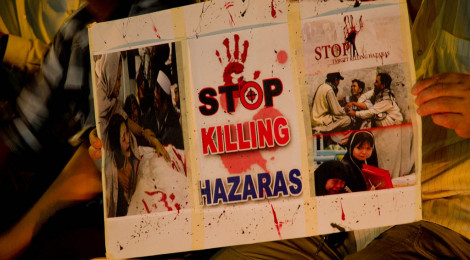
Who’s Killing Pakistan’s Shia and Why?

    Monday, May 26, 2014   No comments
C. Christine Fair

According to the Human Rights Commission of Pakistan, in 2013 nearly 700 Shia were killed and more than 1,000 were injured in more than 200 sectarian terrorist attacks. Over 90 percent of those attacks occurred in Quetta, Karachi, Kangu, Parachinar, Islamabad and Rawalpindi. Since the beginning of 2000, nearly 4,000 persons have been killed and 6,800 injured (see figure below).  Who is hunting Pakistan’s Shia and, most importantly, why?

Thursday, February 27, 2014

Iran’s Rouhani Puts U.S.-Saudi Ties to the Test

    Thursday, February 27, 2014   No comments
by David Ottaway

The opening of a dialogue between the United States and Iran has stirred  deep-seated fears in Saudi Arabia that the Obama administration may be headed for a “grand bargain” with Tehran at the Saudis’ expense, raising further doubts about Saudi dependence on Washington for its security. The Saudis have already sensed flagging U.S. support in their confrontation with Iran over Iraq and Syria as they wage a bitter battle with the Iranians for Arab and Muslim world leadership.

read more >>

Thursday, February 20, 2014

The vicious schism between Sunni and Shia has been poisoning Islam for 1,400 years - and it's getting worse

    Thursday, February 20, 2014   No comments
Rendering of Imam Hussain after Karbala
The war in Syria began much earlier than is generally recognised. The conflict actually began in the year 632 with the death of the Prophet Mohamed. The same is true of the violence, tension or oppression currently gripping the Muslim world from Iraq and Iran, though Egypt, Bahrain and Saudi Arabia to Yemen, Pakistan and Afghanistan.

A single problem lies behind all that friction and hostility. On Tuesday, Britain's leading Muslim politician, the Foreign Office minister Baroness Warsi, obliquely addressed it in a speech she made in Oman, the Arab state at the south-east corner of the Arabian Peninsula strategically positioned at the mouth of the Persian Gulf. The religious tolerance of the Sultanate, she suggested, offered a model for the whole of the Islamic world. It certainly needs such an exemplar of openness and acceptance.

Monday, November 25, 2013

Almost 80 percent of protesters detained as part of the Gezi Park protests were Alevis, according to daily Milliyet citing a report by Turkish security and intelligence authorities

    Monday, November 25, 2013   No comments
The daily reported that the authorities have prepared a comprehensive and detailed analysis of the anti-governmental protests spread across the country over summer, using detainees as samples.

More than 5,500 demonstrations or activities were staged within the framework of the country-wide movement dubbed “Gezi protests” that were prolonged for 112 days after being kindled in Taksim Gezi Park at the end of May, according to the analysis reported by daily Milliyet columnist Tolga Şardan Nov. 25.

Monday, March 11, 2013

Christians, police clash in Pakistan after Muslim mob burns homes of minority religious group

    Monday, March 11, 2013   No comments

LAHORE, Pakistan — Hundreds of Christians clashed with police across Pakistan on Sunday, a day after a Muslim mob burned dozens of homes owned by members of the minority religious group in retaliation for alleged insults against Islam’s Prophet Muhammad.

Christians are often the target of Pakistan’s harsh blasphemy laws, which rights activists say are frequently used to persecute religious minorities or settle personal disputes. Politicians have been reluctant to reform the laws for fear of being attacked by religious radicals, as has happened in the past.

Islamic Societies Review WEEKLY updates

AdSpace - 2

AdSpace - 2
Books

ISR+


Now reading...


Frequently Used Labels and Topics


Search for old news

AdSpace-1

AdSpace-1
Buy Books

Find Articles by year, month hierarchy


Copyright © Islamic Societies Review. All rights reserved.