Showing posts with label History and Civilizations. Show all posts

Wednesday, July 22, 2015

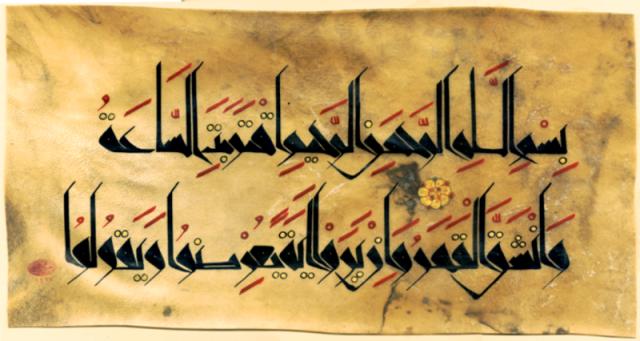
Quran Fragments, Said to Date From Time of Muhammad, Are Found in Britain

    Wednesday, July 22, 2015   No comments
Oldest surviving copies fragments of a Quran manuscript
Fragments of what researchers say are part of one of the world’s oldest manuscripts of the Quran have been found at the University of Birmingham, the school said on Wednesday.
The ancient fragments are probably at least 1,370 years old, which would place the manuscript’s writing within a few years of the founding of Islam, researchers say, and the author of the text may well have known the Prophet Muhammad.

Sunday, June 29, 2014

ISIL changes name and declares its territories a new Islamic state with 'restoration of caliphate' in Middle East

    Sunday, June 29, 2014   No comments
Caliphate according to ISIL & affiliates
The Islamic State of Iraq and the Levant (Isis) has reportedly declared the areas it occupies in Iraq and Syria as a new Islamic state, removing Iraq and the Levant from its name and ushering in “a new era of international jihad”.

The announcement will see the Isis now simply refer to itself as The Islamic State, and the group has called on al-Qa’ida and other related militant Sunni factions operating in the region to immediately pledge their allegiance.

Monday, May 12, 2014

Inside the Arabic Islamic Institute in Tokyo

    Monday, May 12, 2014   No comments
Inside the Arabic Islamic Institute in Tokyo, 15 students of calligraphy raptly practice writing verses from the Qur’an. Yet when the call to prayer is heard, few stir. The instructors and students are Japanese, and only two are Muslims. Here, their calligrapher’s pens (qalam in Arabic) are not made of reeds, as is traditional in much of the Islamic world. Nor do they use the brushes (fude) favored by Japanese calligraphers. Their pens are made of bamboo, which is plentiful in Japan.

Thursday, February 20, 2014

The vicious schism between Sunni and Shia has been poisoning Islam for 1,400 years - and it's getting worse

    Thursday, February 20, 2014   No comments
Rendering of Imam Hussain after Karbala
The war in Syria began much earlier than is generally recognised. The conflict actually began in the year 632 with the death of the Prophet Mohamed. The same is true of the violence, tension or oppression currently gripping the Muslim world from Iraq and Iran, though Egypt, Bahrain and Saudi Arabia to Yemen, Pakistan and Afghanistan.

A single problem lies behind all that friction and hostility. On Tuesday, Britain's leading Muslim politician, the Foreign Office minister Baroness Warsi, obliquely addressed it in a speech she made in Oman, the Arab state at the south-east corner of the Arabian Peninsula strategically positioned at the mouth of the Persian Gulf. The religious tolerance of the Sultanate, she suggested, offered a model for the whole of the Islamic world. It certainly needs such an exemplar of openness and acceptance.

Wednesday, February 19, 2014

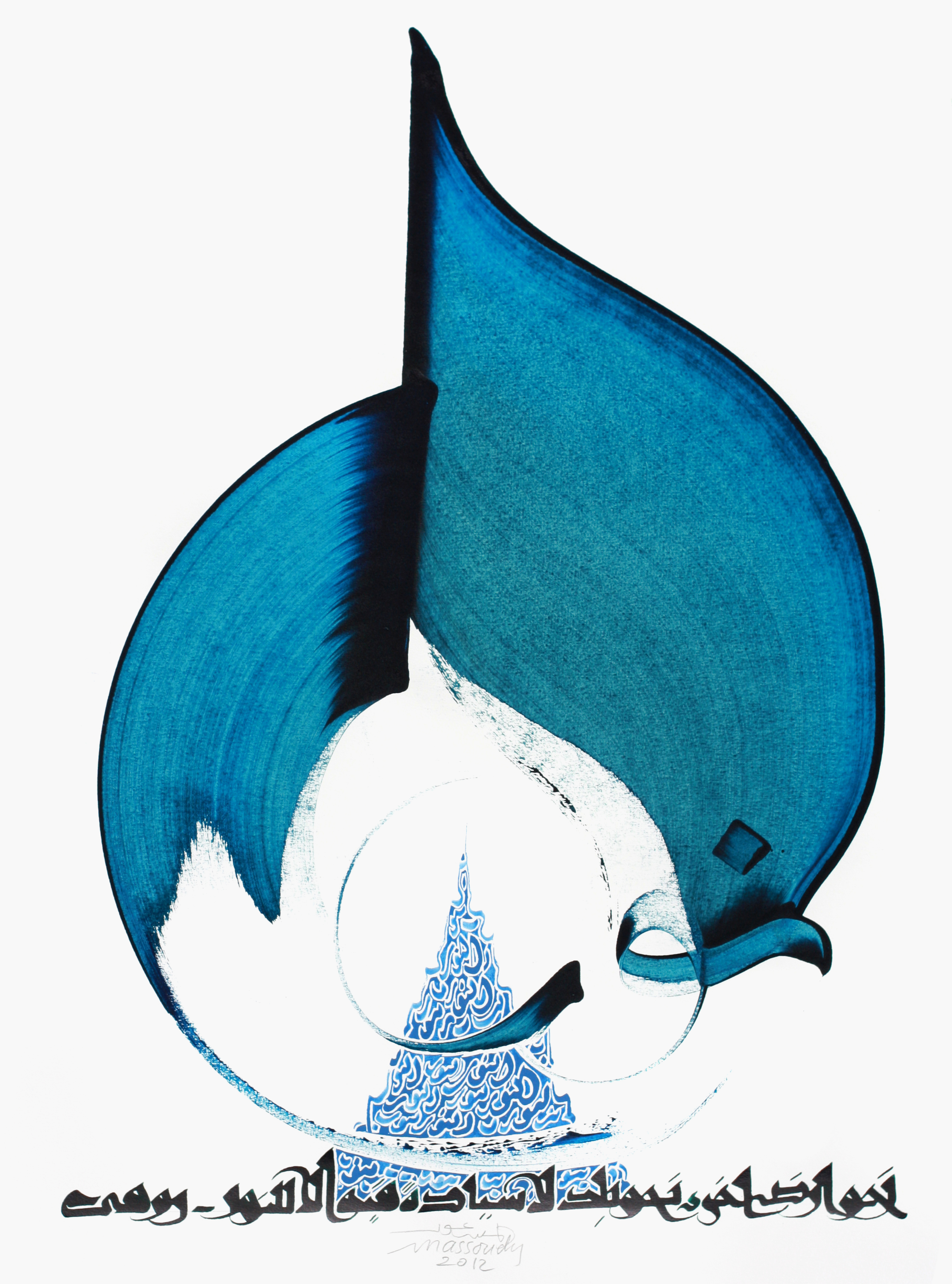
Word As Image: Contextualizing “Calligraffiti: 1984-2013″ with French-Tunisian Street Artist eL Seed

    Wednesday, February 19, 2014   No comments
BY RUSTIN ZARKAR

“Calligraffiti:1984-2013,” runs from September 5th to October 5th, 2013 at New York’s Leila Heller Gallery. As an updated version of the original show in 1984, the current exhibition features nearly fifty artists from the Middle East, North Africa, Europe, and North America. The article below also contains segments of an interview with French-Tunisian street artist eL Seed.

Thursday, August 29, 2013

A Pilgrimage to a Person

    Thursday, August 29, 2013   No comments

When you are not with close friends,
you are not in the presence.

It is sad to leave the people you travel with.
How much more so those who remind you of God.
Hurry back to the ones protecting you.

On every trip, have only one objective,
to meet those who are friends
inside the presence.

If you stay home, keep the same purpose,
to meet the innermost presence
as it lives in people.

Be a pilgrim to the Ka`ba inside a human being,
and Mecca will rise into view on its own.


__________
A Rumi's poem, translated by Coleman Barks

Sunday, August 25, 2013

Erdoğan says history will curse Al-Azhar Sheikh for endorsing coup

    Sunday, August 25, 2013   No comments
Turkey's prime minister has slammed Egypt's leading Islamic cleric for endorsing the military coup in Egypt, saying that history will curse scholars like him.
Ahmet al-Tayed, Grand Sheikh of Al-Azhar, backed an army-sponsored roadmap on July 3 which removed former President Mohammed Morsi, suspended the constitution and called for early presidential and parliamentary elections.

The leader of Cairo's ancient seat of Sunni Muslim learning made a brief statement following an announcement by the head of the armed forces that deposed the elected president, endorsing the military coup. 

Tuesday, July 30, 2013

Exhibition showcasing over 1000 years of Islamic art and architecture opens at the Asian Civilisations Museum

    Tuesday, July 30, 2013   No comments
The Asian Civilisations Museum presents an exhibition of works of art from the Aga Khan Museum. Featuring masterpieces of Islamic art and architecture spanning many centuries and from regions around the world, Treasures of the Aga Khan Museum: Architecture in Islamic Arts are on display at the ACM from 19 July to 28 October 2012. Architecture, with tiled and gilt domes, shaded courtyards, and inscribed gates, became a natural expression of Islam. The exhibition reveals how Muslim artists perceived the Islamic built environment. Over 100 objects, ranging from manuscript illumination, paintings, and architectural elements to hajj certificates and tiles decorated with passages from the Qur‟an, illustrate ideas of space and decoration in both religious and secular environments. The exhibition offers insights into some of the great Islamic dynasties: the al-Andalus of the Iberian Peninsula; Ilkhanid, Timurid, and Safavid Iran; Ottoman Turkey; and Mughal India. “Islamic architecture is one of the most visible aspects of Islamic culture,” says Dr Alan Chong, director of the Asian Civilisations Museum. “This exhibition approaches architecture from several points of view. Intricately painted illuminations capture the world in miniature, and invite the viewer into splendid palaces and intimate gardens. At the same time, visitors can inspect carved wooden beams and brilliantly coloured glazed tiles that once decorated mosques and other buildings. We hope that visitors will gain new insights into the history and creativity of the Islamic world.”

read more >>

Azeri maqami musician Alim Qasimov will be joining an Iranian band to perform a concert at the 49th International Festival of Carthage in Tunis

    Tuesday, July 30, 2013   No comments
Vocalist Mohammad Motamedi will lead the group, which also features Sina Jahanabadi on kamancheh, Azad Mirzapur on tar, Pasha Hanjani on ney, and Hossein Rezaeinia and Milad Abassi on daf.

The concert has been scheduled for August 3 at the festival, which is currently underway in Tunisia. The festival will run until August 17.

Friday, July 26, 2013

Kufic Ancient and Modern: from calligraphy to typography

    Friday, July 26, 2013   No comments
The Kuficpedia project is developing through an international group of scholars and designers with a shared interest in the Kufic script. The project came together around the historical research and achievements of calligrapher and typeface designer, Seyed Mohammad Vahid Mousavi Jazayeri. Vahid’s study of Thulth and Naskh scripts began in 1982 and after nearly ten years of training he began teaching students in Tehran since 1991. Within a year, he was developing two complementary fields: historical calligraphy research in a range of media (ceramics, coins, plaster and stone, as well as manuscripts) and contemporary type design.

Wednesday, July 24, 2013

While important government figures were playing “brotherhood” at five star hotels, the groups have decided to share the table with the Anti-Capitalist Muslims, who share Alevis’ sorrow and recognize the community as it is, rather than attempting to define the group

    Wednesday, July 24, 2013   No comments
An Alevi association has announced plans to reject an offer from President Abdullah Gül to attend an iftar at Istanbul’s five-star Polat Renaissance Hotel in favor of breaking the fast with the Anti-Capitalist Muslims group.

The Central Office of Alevi Cultural Associations and the Hubyar Sultan Association said brotherhood between Alevis and the government could not be secured only at iftar tables, noting that Alevi citizens’ problems and requests have been ignored by the government for years.

While important government figures were playing “brotherhood” at five star hotels, the groups have decided to share the table with the Anti-Capitalist Muslims, who share Alevis’ sorrow and recognize the community as it is, rather than attempting to define the group.

“We believe brotherhood cannot be secured merely by eating and drinking at a table in an environment where cemevis are still not counted as houses of worship, compulsory Sunni education is continued for Alevi children, children are forced to choose elective Sunni religion classes, Alevi houses of worship, especially the Hacı Bektaş Dervish lodge, which was extorted by the government, have not been given back to Alevis and the Madımak Hotel has been converted into a memorial house where the murderers’ names are also found instead of [being converted into] an exemplary museum condemning the [1993 Sivas] massacre,” the foundation said in a statement yesterday.

“Alevis don’t have equal rights in all fields as should be in a democratic country, and the government does not cease defining and describing faiths, their prayers and houses of worship,” the statement said.

read more >>

Tuesday, May 28, 2013

How Timbuktu’s manuscripts were saved from jihadists

    Tuesday, May 28, 2013   No comments
In TIMBUKTU, MALI — It was 7 o’clock on a hot night in August, and Hassine Traore was nervous. Behind him were 10 donkeys, each strapped with two large rice bags filled with ancient manuscripts. The bags were covered in plastic to shield them from a light rain.

Radical Islamists had entered Timbuktu four months earlier, and they had set about destroying everything they deemed a sin.
They had demolished the tombs of Sufi saints. They had beaten up women for not covering their faces and flogged men for smoking or drinking. They most certainly would have burned the manuscripts — nearly 300,000 pages on a variety of subjects, including the teachings of Islam, law, medicine, mathematics and astronomy — housed in public and private libraries across the city.

The scholarly documents depicted Islam as a historically moderate and intellectual religion and were considered cultural treasures by Western institutions — reasons enough for the ultraconservative jihadists to destroy them.

But a secret operation had been set in motion within weeks of the jihadist takeover. It included donkeys, safe houses and smugglers, all deployed to protect the manuscripts by sneaking them out of town.

This is the story of how nearly all the documents were saved, based on interviews with an unlikely cast of characters who detailed their roles for the first time. They included Traore, a 30-year-old part-time janitor, and his grandfather, a guard.

“We knew that if we attracted any attention, the Islamists would arrest us,” Traore recalled.

read more >>

Thursday, September 20, 2012

Rage, but also self-criticism

    Thursday, September 20, 2012   No comments

Though most Muslims felt insulted by a film trailer that disparaged the Prophet Muhammad, many were embarrassed by the excesses of protesters and preachers

AFTER the noon prayer in Cairo’s Tahrir Square on September 14th, a copiously bearded speaker delivered a rousing, finger-wagging open-air sermon. Thundering against the incendiary anti-Muslim film trailer that recently appeared on the internet, he warned his brothers to prepare for battle, urging them to take up weapons against incoming “Crusader armies”. Soon after, youths resumed a rock-throwing assault on police protecting the nearby American embassy.

As with past incidents of what many Muslims see as Western attacks against their beliefs, similar scenes unfolded across the Muslim world, producing tragic results. The anger displayed at all these events was certainly real, and widely shared among Muslims. Yet the television coverage of protests obscured an obvious fact. As in many other protests across the region, the crowd at the fiery Friday sermon in Cairo numbered in the mere hundreds, in a space where throngs a thousand times bigger have become commonplace. In the midst of a city of perhaps 20m inhabitants, the rest went about their business as usual. The number of youths who actually picked up rocks barely rose to the dozens. Their anger was aimed as much at the police as against “the West”. The street-fighting looked more like a rowdy sporting event, replete with parading to the cameras, than a clash of civilisations.


Sunday, June 24, 2012

Women are more violent, says study

    Sunday, June 24, 2012   No comments

BY SOPHIE GOODCHILD
Bruised and battered husbands have been complaining for years and now the biggest research project of its kind has proved them right. When it comes to domestic confrontation, women are more violent than men.

The study, which challenges the long-standing view that women are overwhelmingly the victims of aggression, is based on an analysis of 34,000 men and women by a British academic. Women lash out more frequently than their husbands or boyfriends, concludes John Archer, professor of psychology at the University of Central Lancashire and president of the International Society for Research on Aggression.

Male violence remains a more serious phenomenon: men proved more likely than women to injure their partners. Female aggression tends to involve pushing, slapping and hurling objects. Yet men made up nearly 40 per cent of the victims in the cases that he studied - a figure much higher than previously reported.

Professor Archer analysed data from 82 US and UK studies on relationship violence, dating back to 1972. He also looked at 17 studies based on victim reports from 1,140 men and women. Speaking last night, he said that female aggression was greater in westernised women because they were "economically emancipated" and therefore not afraid of ending a relationship.

Saturday, June 2, 2012

Visit Afghanistan's 'Little America,' and See the Folly of For-Profit War

    Saturday, June 02, 2012   No comments

by David Rohde

First with an ill-fated Cold War-era project and now with the war today, Helmand province has been the source of enormously lucrative private contracting that has done little to improve peoples' lives.

Eight years ago, a 72-year-old American aid worker named Charles Grader told me a seemingly fantastical story. In a bleak stretch of Afghan desert that resembled the surface of Mars, several dozen families from states like Montana, Wisconsin and California had lived in suburban tract homes with backyard barbecues. For 30 years during the Cold War, the settlement served as the headquarters of a massive American project designed to wean Afghans from Soviet influence.

Saturday, March 17, 2012

The Islamic legacy of scientific research

    Saturday, March 17, 2012   No comments

by Sajjad Shahid
al-Farabi
Intellectual attempts at identifying defining parameters of Islamic culture have proven to be a complex exercise which is often limited to attempts at isolating points of cultural unity among Muslims from different parts of the world. Realisation of the fact that religion alone cannot be considered the defining parameter of identity had led early scholars to attempt evaluation of the legacy of Islam through a division of its cultural canvas on religious and secular grounds. Understandably such academic pursuits proved to be incomplete and were invariably inconclusive leading to the recent trends which encourage the study of Islam as an aspect of the cultures of regions with sizable Muslim populations. 

The cultural achievements of Muslims cannot be attributed to Arab intellect alone as a bulk of the Islamic ethos was built up on contributions made by old and established cultures brought into the Muslim fold. The rapid spread of Islam in its initial stages gave almost no opportunity for cultural development to keep pace with the requirements of an ever expanding sphere of influence. With no other options available, Islamic culture from its nascent stages developed a tendency to absorb elements of other cultures enabling early emergence of a distinct ethos which it could claim as its own. The resulting cultural canvas was a unique blending of the best elements derived from the individual cultural repertoires of Persia, Mesopotamia, Egypt and Spain. 

Wednesday, December 28, 2011

Why the Arabic World Turned Away from Science

    Wednesday, December 28, 2011   No comments

by Hillel Ofek

Contemporary Islam is not known for its engagement in the modern scientific project. But it is heir to a legendary “Golden Age” of Arabic science frequently invoked by commentators hoping to make Muslims and Westerners more respectful and understanding of each other. President Obama, for instance, in his June 4, 2009 speech in Cairo, praised Muslims for their historical scientific and intellectual contributions to civilization:

It was Islam that carried the light of learning through so many centuries, paving the way for Europe’s Renaissance and Enlightenment. It was innovation in Muslim communities that developed the order of algebra; our magnetic compass and tools of navigation; our mastery of pens and printing; our understanding of how disease spreads and how it can be healed.

Such tributes to the Arab world’s era of scientific achievement are generally made in service of a broader political point, as they usually precede discussion of the region’s contemporary problems. They serve as an implicit exhortation: the great age of Arab science demonstrates that there is no categorical or congenital barrier to tolerance, cosmopolitanism, and advancement in the Islamic Middle East.

To anyone familiar with this Golden Age, roughly spanning the eighth through the thirteenth centuries a.d., the disparity between the intellectual achievements of the Middle East then and now — particularly relative to the rest of the world — is staggering indeed. In his 2002 book What Went Wrong?, historian Bernard Lewis notes that “for many centuries the world of Islam was in the forefront of human civilization and achievement.” “Nothing in Europe,” notes Jamil Ragep, a professor of the history of science at the University of Oklahoma, “could hold a candle to what was going on in the Islamic world until about 1600.” Algebra, algorithm, alchemy, alcohol, alkali, nadir, zenith, coffee, and lemon: these words all derive from Arabic, reflecting Islam’s contribution to the West.

Today, however, the spirit of science in the Muslim world is as dry as the desert. Pakistani physicist Pervez Amirali Hoodbhoy laid out the grim statistics in a 2007 Physics Today article: Muslim countries have nine scientists, engineers, and technicians per thousand people, compared with a world average of forty-one. In these nations, there are approximately 1,800 universities, but only 312 of those universities have scholars who have published journal articles. Of the fifty most-published of these universities, twenty-six are in Turkey, nine are in Iran, three each are in Malaysia and Egypt, Pakistan has two, and Uganda, the U.A.E., Saudi Arabia, Lebanon, Kuwait, Jordan, and Azerbaijan each have one.

There are roughly 1.6 billion Muslims in the world, but only two scientists from Muslim countries have won Nobel Prizes in science (one for physics in 1979, the other for chemistry in 1999). Forty-six Muslim countries combined contribute just 1 percent of the world’s scientific literature; Spain and India each contribute more of the world’s scientific literature than those countries taken together. In fact, although Spain is hardly an intellectual superpower, it translates more books in a single year than the entire Arab world has in the past thousand years. “Though there are talented scientists of Muslim origin working productively in the West,” Nobel laureate physicist Steven Weinberg has observed, “for forty years I have not seen a single paper by a physicist or astronomer working in a Muslim country that was worth reading.”

Comparative metrics on the Arab world tell the same story. Arabs comprise 5 percent of the world’s population, but publish just 1.1 percent of its books, according to the U.N.’s 2003 Arab Human Development Report. Between 1980 and 2000, Korea granted 16,328 patents, while nine Arab countries, including Egypt, Saudi Arabia, and the U.A.E., granted a combined total of only 370, many of them registered by foreigners. A study in 1989 found that in one year, the United States published 10,481 scientific papers that were frequently cited, while the entire Arab world published only four. This may sound like the punch line of a bad joke, but when Nature magazine published a sketch of science in the Arab world in 2002, its reporter identified just three scientific areas in which Islamic countries excel: desalination, falconry, and camel reproduction. The recent push to establish new research and science institutions in the Arab world — described in these pages by Waleed Al-Shobakky (see “Petrodollar Science,” Fall 2008) — clearly still has a long way to go.

Given that Arabic science was the most advanced in the world up until about the thirteenth century, it is tempting to ask what went wrong — why it is that modern science did not arise from Baghdad or Cairo or Córdoba. We will turn to this question later, but it is important to keep in mind that the decline of scientific activity is the rule, not the exception, of civilizations. While it is commonplace to assume that the scientific revolution and the progress of technology were inevitable, in fact the West is the single sustained success story out of many civilizations with periods of scientific flourishing. Like the Muslims, the ancient Chinese and Indian civilizations, both of which were at one time far more advanced than the West, did not produce the scientific revolution.

Nevertheless, while the decline of Arabic civilization is not exceptional, the reasons for it offer insights into the history and nature of Islam and its relationship with modernity. Islam’s decline as an intellectual and political force was gradual but pronounced: while the Golden Age was extraordinarily productive, with the contributions made by Arabic thinkers often original and groundbreaking, the past seven hundred years tell a very different story.


Saturday, December 17, 2011

Revolution in the heavens OR evolution of Science

    Saturday, December 17, 2011   No comments


by David Wootton
                                                                   
On the night of February 19, 1604, Johannes Kepler was out measuring the position of Mars in the sky with a metal instrument called a quadrant. It was bitterly cold with a biting wind. Kepler found that if he removed his gloves, his hands were soon too numb to manage his instrument; if he kept them on, he could barely make the fine adjustments necessary. The wind was too strong to keep a candle alight, so he had to read his measurements and write them down by the light of a glowing coal. The results, he felt sure, were unsatisfactory – he was out, he thought, by ten minutes of a degree. On a modern school protractor you cannot distinguish ten minutes of a degree, and only one astronomer before Kepler would have thought such a measurement unsatisfactory. The greatest astronomer of the ancient world, Ptolemy, had regarded ten minutes as precisely his acceptable margin of error. But Kepler had worked with Tycho Brahe, who had devised new instruments capable of measuring with unbelievable accuracy, to a single minute.

Kepler was worried about such tiny numbers because he wanted to prove that Tycho’s theoretical tools could not provide an accurate account of Mars’s movement through the heavens – Kepler’s best predictions, using traditional methods, were out by up to eight minutes. By the time Kepler had found a satisfactory way of handling this aberrant eight minutes, he had abandoned the notion that all heavenly movements are circular and introduced the idea of an orbit – the regularly repeated trajectory of an astronomical object through space. This was the culmination of an astronomical revolution that had begun in 1572, with the appearance of a supernova as bright as Venus. According to Aristotle, there was never any change in the heavens, so the nova ought to have been in the upper atmosphere, like a shooting star – but Tycho proved, by measuring parallax (or rather its absence), that it could only be in the heavens. This startling result turned into a large-scale crisis for the old ways of thinking when Tycho’s measurements of the comet of 1577 showed that not only was it in the heavens, but its path cut through the transparent orbs that were supposed to carry the planets – it took Tycho a decade to accept the obvious conclusion that there were no orbs, and that the planets float through space. But not even Tycho could imagine that heavenly movements were anything other than circular.


Islamic Societies Review WEEKLY updates


ISR+


Now reading...


Frequently Used Labels and Topics


Search for old news

Find Articles by year, month hierarchy


Copyright © Islamic Societies Review. All rights reserved.