Showing posts with label Democracy. Show all posts

Monday, August 22, 2022

Pakistan: Charges of terrorism against Imran Khan and prevents broadcasting of his speeches

    Monday, August 22, 2022   No comments

Pakistani authorities deploy the "terrorism" label to address political dissent, risking instability and further uncertainty.

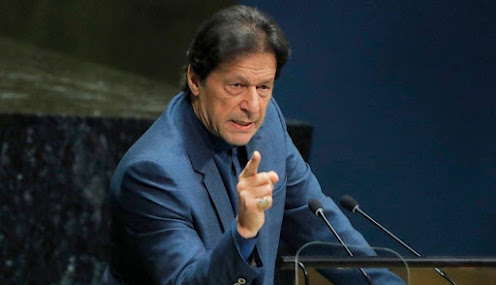
On Monday, Pakistani police charged former Prime Minister Imran Khan with terrorism charges, who is leading popular demonstrations calling for early elections.

The former prime minister of Pakistan accused the government of briefly blocking YouTube in the country to prevent Pakistanis from listening live to his speech at a political rally on Sunday evening.

"The importing government blocked YouTube in the middle of my speech," Khan said in a tweet.

Demonstration in Pakistan against the continued detention of a leader in the "Insaf" party

Supporters of the Pakistan "Insaf" party led by Imran Khan demonstrated against the authority's continued detention of the party's leader, Shahbaz Gul, 10 days ago.


The demonstrators demanded the release of Shahbaz Gul, who is the deputy head of the party. Simultaneously, the local government in Punjab - led by allied with Imran Khan - issued an arrest warrant for 12 officials in the ruling party.


Saturday night's protest gathering was followed by the arrest of a prominent leader of the "Insaf Movement", who was accused by the authorities of making statements against the army on a TV channel whose broadcast was later suspended.


Criticism of the military establishment that has ruled Pakistan for nearly half of its 75-year history is a red line.


Asad Omar, a senior official in the "Insaf Movement", denounced the move by the media regulator to ban Khan's speeches. "Banning Imran Khan's speeches is another attempt to find an administrative solution to a political problem," he told AFP. He added that his party would file an appeal against the decision before the court.


Simultaneously, a decree was issued banning TV channels from broadcasting live speeches by former Prime Minister Imran Khan.


The media regulator issued this decision against the background of a speech in which Khan criticized police and judicial officials after the arrest of one of his party leaders.


The authority said that Khan "is making baseless accusations and spreading hate speech," adding that "his provocative statements against state institutions and officers will cause disturbances - most likely - to public peace and tranquility."

Pakistan opposition warns Khan's arrest would cross 'red line' after being reported under anti-terror law


Pakistani opposition leaders warned Monday that the authorities would cross a "red line" if they arrest former Prime Minister Imran Khan, after he was reported under the Anti-Terrorism Act over comments he made about the judiciary.

Since being ousted in a no-confidence vote in April, Khan has organized rallies across the country, warning state institutions including the military not to back the coalition government led by his longtime political rival Shahbaz Sharif.

Hundreds gathered outside Khan's home on Monday, apparently with the aim of preventing police access, but Khan has been facing a raft of charges for several months, and he has yet to be arrested.

For his part, former Information Minister Fouad Chaudhry wrote on Twitter, "Wherever you are, go to Bani Gala today and show solidarity with Imran Khan," referring to Khan's home. "Imran Khan is our red line," he added.

An initial police report was filed on Sunday as the first step in a process that could lead to formal charges and an arrest.

A light police presence was observed outside Khan's residence Monday, as about 500 supporters of his party gathered in the affluent suburb.

Muhammad Ayub said he traveled overnight from Peshawar in the northwest to be on site to show support for Khan.

"We will protest and block the roads if Khan is arrested," he told AFP.

Khan's Pakistan Tehreek-e-Insaf party said in a statement that the latest accusations against him were "frivolous".

"We have serious reservations about this politically motivated step, which leads to more instability in the country," he added.

Khan on Saturday criticized a judge responsible for keeping a party official in police custody, after party leaders said he was tortured in custody.

Khan's main goal is to hold an early general election before the expected date before October 2023, but the government has shown no indication that it is willing to go to the polls at a time when it is facing significant economic problems.

Since he was ousted from power by a vote of no-confidence last April, Imran Khan has organized a series of popular anti-government demonstrations.


The ban came into effect immediately on Saturday night, the same day Khan held a rally in the capital where he criticized police and judiciary officials over the arrest of one of his party leaders.


Khan remains popular among young people, with his speeches attracting the highest viewership ratings on television channels, while his highlights are widely shared on social media.


Monday, May 16, 2022

Results of the Lebanese Parliamentary Elections (partial)

    Monday, May 16, 2022   No comments


The Lebanese Parliamentary Elections.. Announcing the winning candidates in 12 constituencies

The representatives were distributed among their parties so far, according to the following:

Hezbollah and Amal Movement: 32 deputies

Free Patriotic Movement: 20 deputies

Lebanese Forces Party: 18 deputies

The Kataeb Party: 5 MPs

Tashnak Party: 2

Marada party: 2

Independents: 14 deputies

Civil society: 11 deputies


The Minister of Interior and Municipalities of Lebanon held a press conference at eleven at night in which he announced the preliminary and non-final percentages of the parliamentary elections that took place in the 15 constituencies on all Lebanese territories. And the Lebanese National News Agency reported that the minister said, in an on-screen explanation, that "the percentages are estimates and are not final, and they are issued by the operations room in the General Directorate of the Internal Security Forces after the officers communicated with the heads of the regions in all regions. There are 60 unfinished positions remaining. Some have been handed over. The heads of the centers, the registration committees, the records of the pens, according to what we received from the directorate, and he said: "They are discretionary percentages, and they become final after looking into all the objections submitted by the candidates or the candidates' representatives, and we will follow up on the final result little by little."

Minister Mawlawi read out the estimated voting percentages after closing the polls, with the exception of 60 polling stations, which are as follows:
Beirut First District: 28.50%
Beirut Second District: 38.33%
Mount Lebanon First District (Byblos - Kesrouane): 55.93%
Mount Lebanon Second District (Matn): 42.70%
Mount Lebanon Third District (Baabda): 43.44%
Mount Lebanon Fourth District (Chouf - Aley): 44.49%
South District One (Sidon - Jezzine): 42.30%
Second South District (Sidon Villages - Tyre): 42.77%
South District Three: (Hasbaya - Marjeyoun - Nabatiyeh - Bint Jbeil): 41.76%
North District One (Akkar): 40.73%
Second North District (Minya - Denniye - Tripoli): 30.60%
North Third District (Zgharta - Bcharre - Koura - Batroun): 38.45%
Bekaa District One (Zahle): 43.02%
Second Bekaa Constituency (Rashaya - West Bekaa): 34.20%
Bekaa Third District (Baalbek-Hermel): 48.90%
Total in all of Lebanon: 41.04%

Parliamentary elections are held in Lebanon every 4 years, according to the distribution adopted since the Taif Agreement in 1989, with 128 seats divided equally between Muslims and Christians throughout the country.

The 128 seats are distributed as follows: 28 for Sunnis, 28 for Shiites, 8 for Druze, 34 for Maronites, 14 for Orthodox, 8 for Catholics, 5 for Armenians, two seats for Alawites, and one seat for minorities within the Christian community.

Some details:

According to Mawlawi, the voter turnout in the second district of Mount Lebanon (Northern Matn) reached 49.43%, and the winners are:

Two seats for the Free Patriotic Movement: Ibrahim Kanaan and Elias Bou Saab.
Two seats for the Lebanese Forces party: Melhem Riachy and Razi al-Hajj.
Two seats for the Lebanese Kataeb Party: Sami Gemayel and Elias Hankash.
A seat for the Tashnaq party: Hagop Pakradounian.
Independent seat: Michel Murr.

As for the fourth district of Mount Lebanon (Chouf - Aley), the voter turnout reached 48.6%, and the winners are:

5 seats for the Progressive Socialist Party: Taymour Jumblatt, Marwan Hamadeh, Akram Chehayeb, Bilal Abdullah and Raji Al-Saad.
3 seats for the Free Patriotic Movement: Farid Al-Bustani, Cesar Abi Khalil and Ghassan Atallah.
3 independent seats: Najat Khattar Aoun, Halima Kaqour and Mark Daou.
Two seats for the Lebanese Forces party: George Adwan and Nazih Matta.


In the third district of the North (Bcharre - Batroun - Zgharta - Koura), the voter turnout was 44.20%. The winners are:

Two seats for the Lebanese Forces party: Sethrida Geagea and Ghiath Yazbek.
Two seats for the Free Patriotic Movement: Gebran Bassil and George Atallah.
Two seats for the Marada Movement: Tony Franjieh and William Tawk.
3 seats for independents: Michel Moawad, Adib Abdel Massih and Michel Douaihy.


As for the third district of the South (Bint Jbeil - Nabatiyeh - Marjayoun and Hasbaya), the winners are:
3 seats for Hezbollah: Muhammad Raad, Hassan Fadlallah and Ali Fayyad.
6 seats for the Amal Movement: Hani Qubaisi, Ali Hassan Khalil, Ayoub Hamid, Ashraf Baydoun, Nasser Jaber and Qassem Hashem.
Two seats for independents: Elias Jarada and Firas Hamdan.


Molloy had announced, earlier, the results of the following departments:

- South District One (Sidon - Jezzine), the voter turnout was 46.6%, and the winners are:

3 seats for independents: Abdel Rahman Al-Bizri, Osama Saad and Charbel Massad.
Two seats for the Lebanese Forces party: Ghada Ayoub and Saeed Al-Asmar.

In the second district of the South (Tyre - Sidon villages), the voter turnout was 48.8%, and the winners are:

5 seats for the Amal Movement: Nabih Berri, Ali Khreis, Inayat Ezzedine, Ali Oseiran and Michel Musa.
Two seats for Hezbollah: Hussein Jashi and Hassan Ezzedine.

Bekaa District One (Zahle), the voter turnout was 49.5%, and the winners are:

Two seats for the Lebanese Forces party: George Akis and Elias Stephan.
Seat of the Free Patriotic Movement: Salim Aoun.
A seat for the Tashnaq Party: George Bushekian.
A seat for Hezbollah: Rami Abu Hamdan.
Independent seat: Michel Daher.

The Second Bekaa Constituency (West Bekaa - Rashaya), the voter turnout was 42.47%, and the winners are:

A seat for the Amal movement: Qabalan Qabalan.
Seat of the Progressive Socialist Party: Wael Abu Faour.
Seat of the Free Patriotic Movement: Charbel Maroun.
3 independent seats: Hassan Murad, Yassin Yassin and Ghassan Skaf.

In the third Bekaa constituency (Baalbek-Hermel), the winners are:

Six seats for Hezbollah: Hussein Al-Hajj Hassan, Ihab Hamadeh, Ali Al-Miqdad, Ibrahim Al-Mousawi, Yall Al-Solh, and Melhem Al-Hujairi.
Seat for the Amal Movement: Ghazi Zuaiter.
Seat of the Free Patriotic Movement: Samer Al-Tom.
Seat of the Lebanese Forces: Antoine Habashi.
Seat for Independents: Jamil El-Sayed.

- Mount Lebanon First Constituency (Byblos - Kesrouan), the voter turnout was 63.4%, and the winners are:

Two seats for the Lebanese Forces party: Ziad Al-Hawat and Shawki Daccache.
Two seats for the Free Patriotic Movement: Simon Abi Ramia and Nada Al-Bustani.
Two seats for independents: Nima'a Afram and Farid Haikal El-Khazen.
Seat of the Lebanese Kataeb Party: Salim Al-Sayegh.
A seat for Hezbollah: Raed Berro.

- Mount Lebanon Third District (Baabda), the voter turnout was 47.39%, and the winners are:

Seat of the Lebanese Forces Party: Pierre Bou Assi.
Seat of the Free Patriotic Movement: Alain Aoun.
Seat of the Progressive Socialist Party: Hadi Abul-Hassan.
Seat of the National Liberal Party: Camille Chamoun.
A seat for Hezbollah: Ali Ammar.
A seat for the Amal movement: Fadi Alama.

Thus, the Ministry of Interior has announced the results of 11 constituencies, provided that the results of the remaining four constituencies (Beirut's first and second districts and the first and second districts of the North) will be announced, respectively. The voter turnout in all of Lebanon reached about 41%, noting that the voter turnout in the 2018 session was 49.68%.

Monday, November 9, 2020

What US 2020 Elections tell us about Americans’ values systems

    Monday, November 09, 2020   No comments


Trump: “This fucking virus, what does it have to do with me getting reelected?”

~  Inside Donald Trump’s 2020 undoing


Let’s not forget what US presidential elections tone and results confirm: The rude and candid discourse that elevates personal interests above all else; the power of those who consider themselves better and superior and more deserving; and their view that everyone else should be grateful that they can serve them and be thankful for the opportunity to exist in the same space they exist even as servants… just under half of the American public approved of such tone and character. And from what data reveal, the standard bearer of the supremacist discourse lost not because, nationally, just 3% of the voters 3% more people rejected his supremacist discourse and value system, but because 3% of the voters disapproved of his mismanagement of a pandemic crisis that killed quarter million people in less than eight months. This reality cannot be covered by the veneer of deliberately selected photos of some Americans celebrating the win by the less openly supremacist candidate.


 News story: ~  Inside Donald Trump’s 2020 undoing


Thursday, August 10, 2017

'Islam is in a transformative process'

    Thursday, August 10, 2017   No comments
Abdullahi Ahmed An-Na'im
Muslims feel conflicted about certain aspects of historical Islam, says the Islamic scholar Abdullahi Ahmed An-Na'im. How does the notion of Sharia fit within the idea of a secular state?

Wednesday, June 7, 2017

Dissent is haram in Gulf Nations: Sympathizing with Qatar will cost people living in UAE up to 15 years in prison

    Wednesday, June 07, 2017   No comments
The United Arab Emirates tightened the squeeze on fellow Gulf state Qatar on Wednesday, threatening anyone publishing expressions of sympathy towards Doha with up to 15 years in prison and barring entry to Qataris.
...
The UAE-based newspaper Gulf News and pan-Arab channel Al-Arabiya reported the crackdown on expressions of sympathy with Qatar.

"Strict and firm action will be taken against anyone who shows sympathy or any form of bias towards Qatar, or against anyone who objects to the position of the United Arab Emirates, whether it be through the means of social media, or any type of written, visual or verbal form," Gulf News quoted UAE Attorney-General Hamad Saif al-Shamsi as saying.

On top of a possible jail term, offenders could also be hit with a fine of at least 500,000 dirhams ($136,000), the newspaper said, citing a statement to Arabic-language media.

Slogans against and in support of Qatar have dominated Twitter in Arabic. Newspapers and television channels in the region have also been engaged in a war of words.

source: http://www.reuters.com/article/us-gulf-qatar-idUSKBN18Y0DH

Wednesday, May 31, 2017

A simple question about Saudi Arabia and Democracy causes brain-freeze of Senior State Department official

    Wednesday, May 31, 2017   No comments
Acting Assistant Secretary of State Stuart Jones, who accompanied President Donald Trump and Secretary of State Rex Tillerson to Saudi Arabia last week, was holding a press briefing about the trip’s achievements. Then he was asked a simple question:

While you were over there, the secretary criticized the conduct of the Iranian elections and Iran’s record on democracy. He did so standing next to Saudi officials. How do you characterize Saudi Arabia’s commitment to democracy? And does the administration believe that democracy is a buffer or barrier against extremism?

Jones paused for 20 long seconds to collect his thoughts, then he answered:


I think what we would say is, that at this meeting, we were able to make significant progress with Saudi and GCC [Persian Gulf Cooperation Council] partners in both making a strong statement against extremism and also putting in place certain measures through this GCC mechanism where we can combat extremism. Clearly one source of extremism – one terrorism threat – is coming from Iran. And that’s coming from a part of the Iranian apparatus that is not at all responsive to its electorate.


The moment spells out the difficulty US officials face when they try to explain their alliances with regimes that have no respect for representative governance--such as the Saudi regime.

Watch the clip:


Saturday, February 4, 2017

German international magazine, der spiegel, publishes a dossier about Trump's presidency, the illustrative image is astounding

    Saturday, February 04, 2017   No comments
 ISR comment: The image illustrating the cover dossier of “Der Spiegel,” a leading magazine out of Germany, a country that knows firsthand the consequences of being ruled by populist authoritarians, is astounding. It speaks to the power of art in capturing the moment. Its selection for the cover of the magazine underscores the role of the media and journalism in society during challenging times.
__________________

Donald Trump has now been president of the United States for two weeks. It literally pains me to write about all that has happened in these first days. The president of the U.S. is a racist. He is attempting a coup from the top; he wants to establish an illiberal democracy, or worse; he wants to undermine the balance of power.

Thursday, September 15, 2016

170 new prisons will be built in Turkey to accommodate more than 100,000 inmates

    Thursday, September 15, 2016   No comments
Erdogan claims high-ground  when questioned about his support for armed groups fighting to overthrow the Syrian government: It is shameful to negotiate with the Syrian president who is responsible for hundreds of thousands of lives lost, he argues. But he shrugs off any criticism that he is authoritarian or dictator. Yet, the numbers that his own ministers are making public proves that he is just as cruel: since the failed coup, thousands of soldiers, teachers, professors, doctors, lawyers, students, and anyone suspected of being a follower of Gulen were arrested. It is estimated that nearly 200,000 people were arrested. To accommodate this large number of inmates, the government released thousands of criminals. Signaling the large number of arrests, the government revealed that it will build new prisons, not schools or research centers, prisons, 170 of them, in the next five years. 
 
More than 170 jails will be built over the next five years in Turkey, according to a statement from the Justice Ministry. The ministry’s move comes after the overcrowding in jails caused by the arrests linked to the July 15 failed coup attempt, believed to have been masterminded by the Fethullahist Terror Organization (FETÖ). Source

One could understand that soldiers who take part in a coup to overthrow an elected government should be arrested and punished. But arresting teachers, professionals, and ordinary citizens because they are suspected of being follower of Gulen is what dictators so. When these hundreds of thousands of inmates are added to tens of thousands of Kurdish people killed and tens of thousands imprisoned, Erdogan will be indistinguishable from the dictators he likes to criticizes.


Friday, February 13, 2015

Slow progress: Legacy of racism claims new victims in the U.S.

    Friday, February 13, 2015   No comments

U.S. gunman kills three young Muslims; motive disputed

A gunman who had posted anti-religious messages on Facebook and quarreled with neighbors was charged with killing three young Muslims in what police said on Wednesday was a dispute over parking and possibly a hate crime.

Craig Stephen Hicks, 46, a full-time paralegal student from Chapel Hill, was charged with first-degree murder in Tuesday's shootings around 5 p.m. two miles (three km) from the University of North Carolina campus.

Monday, December 22, 2014

Over 60% of Tunisians able to vote voted; 56% of them voted for Beji Caid Essebsi, 44% voted for Mohamed Moncef Marzouki

    Monday, December 22, 2014   No comments
Over 60% of Tunisians able to vote voted; 56% of them voted for Beji Caid Essebsi, 44% voted for Mohammed Mouncef Marzouki. 

Essebsi, 88, appeared before 2,000 supporters who gathered outside his campaign headquarters in the capital Tunis shouting “Long live Tunisia!” and thanked the voters.

“Tunisia needs all its children. We must work hand in hand,” he said as supporters cheered.

Marzouki dismissed the declaration as unfounded and refused to concede defeat. His camp said the result was too close to call and accused the Essebsi of election “violations”.

It is the first time Tunisians have freely elected their president since independence from France in 1956.

Monday, October 27, 2014

Nidaa Tounes wins 38% of the seats in the Tunisian parliament

    Monday, October 27, 2014   No comments
Tunisia's Ennahda party, the first Islamist movement to secure power after the 2011 "Arab Spring" revolts, conceded defeat on Monday in elections that are set to make its main secular rival the strongest force in parliament.
Official results from Sunday's elections - the second parliamentary vote since Tunisians set off uprisings across much of the Arab World by overthrowing autocrat Zine El-Abidine Ben Ali - were still to be announced.

Friday, April 11, 2014

Despite a New Constitution, the Fight for Gender Equality in Tunisia Continues

    Friday, April 11, 2014   No comments
After more than two years of arguments and concessions between Islamic and secular parties, on January 26, the Tunisian National Constituent Assembly ratified the country’s new Constitution.

When it was signed, assembly members spontaneously started to chant the national anthem and congratulated each other for the achievement. Indeed, there was cause for celebration. Tunisians signed one of the most progressive Constitutions in the Arab world, one that includes a commitment to gender equality. Yet, the celebratory media coverage failed to mention that other Arab countries, such as Algeria and Morocco, have also committed to gender equality in their Constitution.

Saturday, April 5, 2014

Le Pen: "Let them eat pork!"Jewish and Muslim schoolchildren will not be offered alternatives to pork dishes in towns run by National Front

    Saturday, April 05, 2014   No comments
France’s far-right National Front party will prevent schools from offering Muslim and Jewish pupils pork-free lunches in the towns where it won in recent local elections, its leader Marine Le Pen announced on Friday.

She said that arrangements catering to Muslim and Jewish, pupils who cannot eat pork according to religious restrictions, contradict the country’s secular values.

Thursday, August 22, 2013

When anti-terrorism laws are used to harass journalists (and/or their partners)

    Thursday, August 22, 2013   No comments
David Miranda, partner of Guardian journalist Glenn Greenwald who broke the NSA sruvelance story in June, was detained by British intelligence authorities to pressure the Guardian into ceasing its reporting on British and American surveillance activities.  Miranda was interrogated under a law meant to aid the pursuit of terrorists.


The Guardian has been on the front lines of exposing vast surveillance undertaken by the US and the UK -- and has been targeted by the authorities as a result. In an interview, Editor-in-Chief Alan Rusbridger talks about his confrontation with the government and why the scandal isn't making waves in Britain.


Friday, January 20, 2012

Egypt Brothers mix pragmatism, ideology on Israel

    Friday, January 20, 2012   No comments

The Muslim Brotherhood is trying to maneuver its way between its fierce anti-Israel ideology and the realities of governing as it ascends to leadership in Egypt for the first time in its history and faces the key question of how to deal with the country's peace treaty with the Jewish state.
The fundamentalist group's stance on the accord — opposition but not renunciation — is a telling sign of its broader style of politics. It can play down its hardline doctrine in favor of short-term pragmatism as it looks to the long term, leaves its options open and engages in a degree of double-talk to pave the way.
The stance could also reflect the group's own evolution as its new political party, whose members will be the ones actually involved in governing, gradually has to distinguish itself from the hard line of the Brotherhood itself, an 83-year-old organization whose leadership worked for decades in a hive-like secrecy because of state repression.
"The Brotherhood is in a real challenge and real crisis. For the first time, they are in power, which forces them to be rational when it comes to foreign policy because any miscalculations might blow their gains," said Khalil al-Anani, an Egyptian expert on Islamic movements.


Monday, January 16, 2012

The quiet war in Saudi Arabia

    Monday, January 16, 2012   No comments

by Joshua Jacobs*
Demonstrators in Qatif, eastern Saudi Arabia.
While western powers have been happy to use Saudi Arabia as an ally to ratchet up the pressure on Assad's beleaguered regime in Syria, it has not caught a whiff of the silent crackdown occurring within the kingdom. Since late November the protest movement which was largely snuffed out last spring has returned to the streets in force, largely centered on the oil rich and largely Shia Eastern Province.

The Saudi response was both brutal and predictable. Security forces shot and killed three protesters and wounded many more over several days of crackdowns in the eastern city of Qatif. Clashes continued throughout December as demonstrators battled security forces who routinely utilized live ammunition. In a series of retaliatory raids on the homes and districts of protest sympathizers hundreds were arrested and wounded. The killings along with the continued discrimination and mistreatment of the Shia of the Eastern Province has formed the basis of the current protest movement - a protest movement that has suffered heavily like its neighbour in Bahrain, but with little in the way of a headline.

Islamic Societies Review WEEKLY updates


ISR+


Now reading...


Frequently Used Labels and Topics


Search for old news

Find Articles by year, month hierarchy


Copyright © Islamic Societies Review. All rights reserved.
