Tuesday, April 9, 2013

Jabhat Al Nusra, Syrian Islamic Rebel Group, Merges With Al Qaeda In Iraq

    Tuesday, April 09, 2013   No comments
BEIRUT — Al-Qaida's branch in Iraq said it has merged with Syria's extremist Jabhat al-Nusra, a move that shows the rising confidence of radicals within the Syrian rebel movement and is likely to trigger renewed fears among its international backers.

A website linked to Jabhat al-Nusra confirmed on Tuesday the merger with the Islamic State of Iraq, whose leader, Abu Bakr al-Baghdadi, first made the announcement in a 21-minute audio message posted on militant websites late Monday.

Jabhat al-Nusra has taken an ever-bigger role in Syria's conflict over the last year, fighting in key battles and staging several large suicide bombings. The U.S. has designated it a terrorist organization.

The Syrian group has made little secret of its links across the Iraqi border, but until now it has not officially declared itself to be part of al-Qaida.

Al-Baghdadi said that his group – the Islamic State of Iraq – and Syria's Jabhat al-Nusra will now be known as the Islamic State in Iraq and the Levant.

"It is time to announce to the Levantine people and the whole world that Jabhat al-Nusra is merely an extension and part of the Islamic State of Iraq," he said.

He said that the Iraqi group was providing half of its budget to the conflict in Syria. Al-Baghdadi said that the Syrian group would have no separate leader but instead be led by the "people of Syria themselves" – implying that he would be in charge in both countries.


Monday, April 8, 2013

Brazil, China, and India Are Fat, And Getting Fatter

    Monday, April 08, 2013   No comments

In China, the growth rate of new Kentucky Fried Chicken restaurants is 13 percent a year, compared with 2.9 percent in the U.S. And as the chain has expanded, so have Chinese citizens' waistlines. Recently, the aspiring BRICS nations (Brazil, Russia, India, China, and South Africa) met in sunny Durban, South Africa, for their fifth summit to discuss their plans for creating their proposed BRICS Development Bank (BDB). Despite ongoing doubts that these nations will be able to quickly come to an agreement over where and how the bank will function, there is hope that these differences can be overcome.

But there is one issue that the BRICS leaders seemed to have overlooked. That is, how will the BRICS bank address these nations' ongoing struggle to contain the spread of disease? Diseases commonly attributed to economic wealth and prosperity, such as obesity and diabetes, are on the rise and will inevitably threaten their bristling economies should the BDB fail to adequately invest in healthcare infrastructure.

The proposed BDB bank is mainly focused on providing loans and grants - approximately $4.5 trillion in total - to finance infrastructural development projects in the BRICS and other developing nations. This funding will be used to construct railroads, bridges, highways, and ports. Created as an alternative " Bretton Woods for the developing nations," loans will be provided at favorable lending terms. The bank will also provide a currency reserve of $100 billion dollars to be used in times of economic crisis. Another implicit goal through this banking endeavor is to decrease the BRICS and other developing nations' ongoing reliance on the World Bank and IMF for financial assistance while creating a lending facility that better understands developing nations' context and needs.


Christian mourners, mob, police clash in Egypt

    Monday, April 08, 2013   No comments

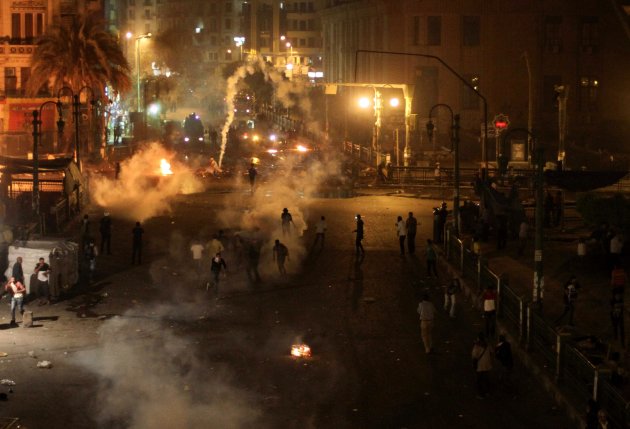
CAIRO (AP) — A mob threw rocks and fired birdshot Sunday at several hundred Christians marching in a protest against Egypt's Islamist government after the funeral of four Christians killed in sectarian clashes over the weekend.
The Christians were chanting slogans against Islamist President Mohammed Morsi, just as several thousand did earlier during the funeral service nearby in the Coptic Orthodox cathedral in Cairo.
The attacking mob, described by witnesses as residents of the area, forced the marchers to take shelter inside the sprawling cathedral complex. They also showered the protesters with rocks from the roofs of nearby buildings, according to witness Ibrahim el-Shareef.
Mohammed Sultan, director of Egypt's national ambulance services, said at least 17 people were wounded in the clashes.

read more >>

WikiLeaks publishes 1.7m US diplomatic records

    Monday, April 08, 2013   No comments
WikiLeaks has published more than 1.7m US records covering diplomatic or intelligence reports on every country in the world.

The data, which has not been leaked, comprises diplomatic records from the beginning of 1973 to the end of 1976, covering a variety of diplomatic traffic including cables, intelligence reports and congressional correspondence.

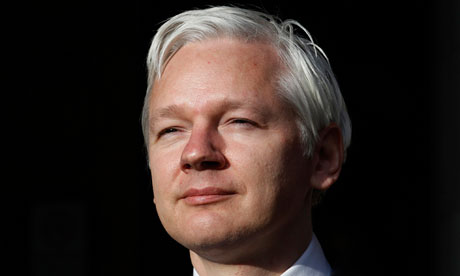
Julian Assange said WikiLeaks had been working for the past year to analyse and assess a vast amount of data held at the US national archives before releasing it in a searchable form.

WikiLeaks has called the collection the Public Library of US Diplomacy (PlusD), describing it as the world's largest searchable collection of US confidential, or formerly confidential, diplomatic communications.

Assange told Press Association the information showed the vast range and scope of US diplomatic and intelligence activity around the world.


Sunday, April 7, 2013

The leader of Iraq’s oil union is being threatened with prison–again

    Sunday, April 07, 2013   No comments

Many Iraqi oil workers thought the fall of Saddam Hussein would mean they would finally be free to organize unions, and that their nationally owned industry would be devoted to financing the reconstruction of the country. But the reality could not have been more different. Earlier this month, the head of the Iraqi Federation of Oil Unions, Hassan Juma’a (below right), was hauled into a Basra courtroom and accused of organizing strikes, a charge for which he could face prison time. The union he heads is still technically illegal: Saddam’s ban on public-sector unions was the sole Saddam-era dictate kept in place under the U.S. occupation, and Iraqi Prime Minister Nouri Maliki hasn't shown any interest in changing it since most U.S. troops left.

And the oil industry? The big multinational petroleum giants now run the nation’s fields. Between 2009 and 2010, the Maliki government granted contracts for developing existing fields and exploring new ones to 18 companies, including ExxonMobil, Royal Dutch Shell, the Italian Eni, Russia's Gazprom and Lukoil, Malaysia's Petronas and a partnership between BP and the Chinese National Petroleum Corporation. When they started, the U.S. military provided the initial security umbrella protecting all of their field operations.

The Ministry of Oil technically still owns the oil, but functions more as the multinationals’ adjunct, while stripping workers of their rights. Since 2003 the ministry has denied the union its right to exist and retaliated against its leaders and activists. As the oil corporations rush in to lay claim to developing fields, ministry spokesman Assam Jihad told the Iraq Oil Report in 2010, “Unionists instigate the public against the plans of the oil ministry to develop [Iraq's] oil riches using foreign development.”


The Nation Is Made Of These

    Sunday, April 07, 2013   No comments

by Javed Jabbar


The further we move on from March 23, 1940—and from December 16, 1971, when the original Pakistan disintegra­ted—the stronger and deeper, and at the same time, more stressful, becomes the search for a cohesive sense of Pakistani nationalism.

Composed of several elements, Muslim identity is the prime driver of Pakistani nationalism, but not exclusively so. Non-Muslim identities are small, yet vital and intrinsic parts of Pakistani nationalism. Foremost among them are Pakistani Hindu and Buddhist citizens. In a foundational sense, Pakistani Hindus and Buddhists are the oldest Pakistanis. Their ancestors have lived upon the lands that constitute our territory for centuries before the first Muslims arrived, or before the first local was converted to Islam.

If roots in territory make people eligible to be regarded as ‘sons of the soil’, then these non-Muslims are the first sons and daughters of Pakistan. It is unfortunate that, in the name of a state entity created less than 70 years ago, peoples whose ancestors have lived on these very territories for over 7,000 years are now ‘minorities’. Worse, many of them are regarded (and regard themselves) as second-class citizens. Adherents of all non-Islamic faiths are ineligible, by virtue of their religion, to be elected president or prime minister. This is so despite the fact that Article 20 of the Constitution grants—subject to law, public order and morality—freedom to profess religion and to manage religious institutions. Article 25, which deals with citizens’ equality says, in part: “All citizens are equal before law and are entitled to equal protection of law.” This is further reinforced by Article 36, which obliges the state to safeguard the legitimate rights and interests of minorities, including their due representation in the federal and provincial services.

Working with Hindus, Christians and Zoroastrians for over 30 years in remote areas and in urban centres, this wri­ter has first-hand experience of their attitudes and act­ions. These non-Muslim Pakistanis have a deep love for Pakistan. They are proud Pakistanis, and contribute abundantly to the country’s progress—and little to its problems! Yet Pakistani Hindus are often regarded by segments of the state and society as Indian ‘agents’ or as being inherently disloyal to Pakistan. Such suspicion is a profanity in itself.

However, this does not prevent non-Muslim Pakistanis from rendering notable roles in all areas, from agriculture, business and law to education, diplomacy and politics.


Azeri Muslims Protest Theologian’s Arrest

    Sunday, April 07, 2013   No comments

By Idrak Abbasov

The arrest of an Muslim theologian who preached against the government in Azerbaijan has sparked a new show of opposition in which representatives of secular parties have sided with Islamists.

Police arrested Taleh Bagirzadeh, 29, on March 31 and charged him with possession of drugs, an allegation often used against opponents of the government.

On April 1, devout Muslims and opposition activists took to Imam Hussain Square in Baku to show their support for Bagirzadeh.

Veysal Gasimov, a member of the opposition Popular Front party, was arrested and sentenced to ten days in jail for taking part in the protest, which attracted between 500 and 600 people.

Further demonstrations followed on April 2, in the town of Lenkoran close to the Iranian border, and in the village of Nardaran, a village 25 kilometres north of the capital Baku which is a focal point for Azerbaijan’s majority Shia Muslim faith.

Residents of Nardaran promised to carrying on protesting both in the village and in Baku until Bagirzadeh is released.


AdSpace - 2

AdSpace - 2
Books

Islamic Societies Review WEEKLY updates


ISR+


Now reading...


Frequently Used Labels and Topics


Search for old news

AdSpace-1

AdSpace-1
Buy Books

Find Articles by year, month hierarchy


Copyright © Islamic Societies Review. All rights reserved.